University
Department of Foreign Languages and Literatures and Modern Cultures (Section of Slavic, Romanian and Hungarian Studies)
via Sant'Ottavio stanza 2N
Zobacz lokalizację na mapie "Geopolonistyka"
Nawiguj z Google Maps
The history of Polish studies at the University of Turin is rooted in the activities of Piedmontese Polonophiles, primarily Attilio Begey (1846–1928), a Turin lawyer and politician involved in the development of the Italian Christian-Democratic movement, and a supporter of A. Mickiewicz and A. Towiański.
On the initiative of Attilio Begey, one of the most active "Pro Polonia" Committees in Italy was established in the Piedmontese capital in 1915. The Committee, which was joined by numerous prominent representatives of the Turin university and society, played an important role during the formation of the Polish Army training camp in Italy, at Campo della Mandria in Chivasso.
We owe the founding of the Attilio Begey Institute of Polish Culture at the University of Turin in 1930 to individuals associated with the Pro Polonia Committee—shaped by the spirit of the Risorgimento and Towianist ideals—including Maria Begey (1879–1957), Attilio’s daughter, as well as the sisters Cristina (1881–1966) and Clotilde Garosci, translators of major works of Polish literature. It was thanks to this initiative that one of the most important centers of Polish studies in Italy eventually emerged at the Turin university.
Since 1933, the Polish language course officially became part of the University of Turin's language curriculum.
Prof. Marina Bersano Begey (1907–1992), author of the first extensive history of Polish literature written by a non-Slav and a valuable anthology of Polish literature, conducted lectures here first as an associate professor and from 1965 to 1975 as a professor.
Marina Bersano was succeeded at the university by Pietro Marchesani, followed by Jan Prokop, who was invited to Turin at Marchesani's suggestion.
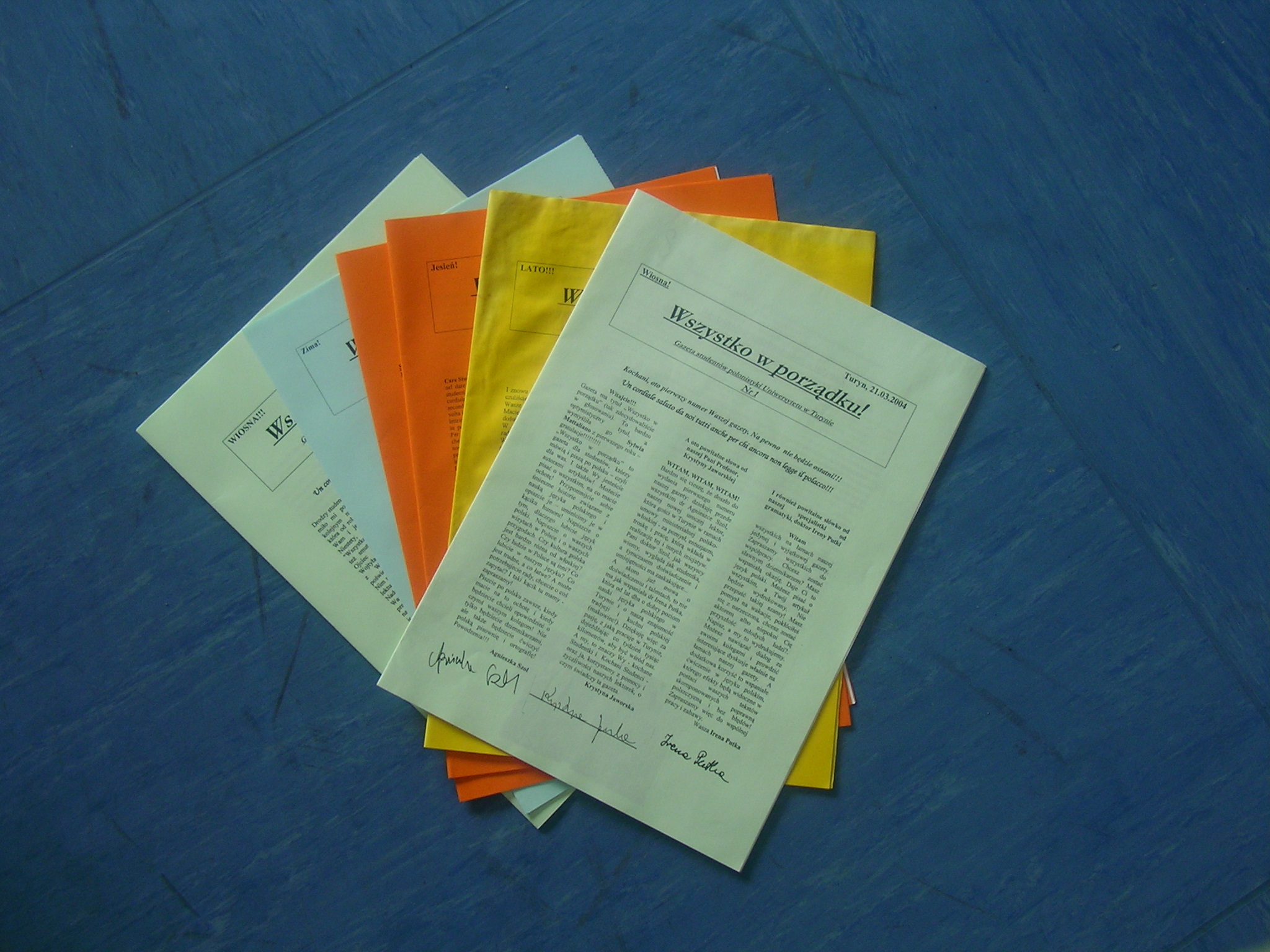
Subsequent lecturers also played a very significant role in the development of Turin's Polish studies. It is impossible not to mention Dr. Zofia Gąsiorowska-Szmydtowa, Dr. Zofia Kozarynowa, Dr. Wojciech Jekiel, Dr. Irena Putka, Dr. Kwiryna Ziemba, and Dr. Magdalena Pastuch.
Currently, the Chair of Polish Language and Literature is headed by Prof. Krystyna Jaworska, working alongside Dr. hab. Dario Prola, Dr. Urszula Marzec, and Dr. Agnieszka Szol.
See also:
- Agnieszka Szol, Historia polonistyki na Uniwersytecie w Turynie, "Postscriptum" nr 1(53), 299-300, 2007, postscriptum-r2007-t-n153-s299-300.pdf
- Krystyna Jaworska, Tradycja polonofilska w Piemoncie a Instytut Kultury Polskiej im. Attilia Begeya, w: Jan Piszkurewicz, Sylwia Szarejko, Instytut Kultury Polskiej Im. Attilia Begeya w Turynie i jego wybitni animatorzy, Instytut Historii Nauki PAN, Warszawa 2025.
Staff:
prof. Krystyna Jaworska – Full Professor, e-mail: krystyna.jaworska@unito.it
dr hab. Dario Prola – Associate Professor, e-mail: dario.prola@unito.it
dr Agnieszka Szol – Lecturer, e-mail: agnieszka.szol@unito.it
dr Urszula Marzec – Lecturer, e-mail: urszula.marzec@unito.it
dr Giulia Randone – Research Assistant, e-mail: giulia.randone@unito.it
mgr. Barbara Delfino – Contract Lecturer, e-mail: barbara.delfino@unito.it
mgr. Simone Bergalla – Contract Lecturer, e-mail: simone.bergalla@unito.it
Forms of Education:
At the University of Turin, the Polish language is taught across several first and second-cycle degree programs. These include: Lingue e letterature moderne (Modern Languages and Literatures, L-11) and Scienze della mediazione linguistica (Linguistic Mediation Sciences, L-12) at the undergraduate level; and Lingue e letterature moderne (Modern Languages and Literatures, LM-37), Comunicazione internazionale per il turismo (International Communication for Tourism, LM-38), Lingue straniere per la comunicazione internazionale (Foreign Languages for International Communication, LM-38), and Traduzione (Translation Studies, LM-94) at the graduate level.
Philology students who choose Polish as one of their two leading languages (Language A – the subject of their thesis; or Language B) attend Polish studies classes for 2 or 3 years, depending on the program. Those who choose Polish in their second or third year as a third, additional language (Language C) or as an elective (Esame a scelta) study it for one year.
Based on an agreement between the Faculty of Applied Linguistics at the University of Warsaw (UW) and the Department of Foreign Languages and Literatures and Modern Cultures at the University of Turin (UniTo), students from both universities can apply for a double degree. From the UW side, first-year graduate students with Italian (as Language B or C) may participate. From the UniTo side, graduate students in the Traduzione program who chose Polish as their first or second foreign language in combination with English, Russian, or German are eligible. The UW-UNITO Double Degree is a specific program: the candidate completes part of the curriculum at the home university (1st year of Master's) and part at the host university (2nd year of Master's).
Program Guidelines:
→ Student mobility covers a full academic year, with a scholarship assigned under the general Erasmus+ rules;
→ The study period and learning outcomes achieved at the partner university are mutually recognized;
→ The Master's thesis defense takes place at the home university;
→ The program concludes with a Master's degree from both the Polish and Italian universities.
More:
REKRUTACJA DO PROGRAMU DOUBLE DEGREE UW UNITO! – IKSI
III cycle studies
At the University of Turin, it is possible to pursue doctoral studies in the field of Polish studies within the framework of Modern Languages and Literatures (Dottorato in Lingue e Letterature Moderne) or Digital Humanities (Dottorato di Ricerca in Digital Humanities). The latter is conducted in cooperation with the University of Genoa.
Erasmus students staying in Turin have the opportunity to participate in all Polish studies classes, including language labs and lectures on Polish language and literature.
Erasmus partner universities in Poland include: University of Białystok; Jagiellonian University and University of the National Education Commission in Krakow; University of Łódź; Maria Curie-Skłodowska University in Lublin; Adam Mickiewicz University in Poznań; University of Silesia; Pomeranian University in Słupsk; Nicolaus Copernicus University in Toruń; IBL PAN, University of Warsaw, Cardinal Stefan Wyszyński University in Warsaw, and the University of Wrocław.
The University of Turin is the only Italian university authorized to organize certificate examinations in Polish as a foreign language. It has organized these exams four times: twice before the system reform (2012, 2015) and twice as an authorized entity (2018, 2019).
List of courses implemented within the aforementioned fields and specializations:
First-cycle studies (Bachelor's):
Polish Language – descriptive grammar, history of the Polish language, and contemporary Polish (three-year course)
Polish Literature – history of literature and monographic course (two-year course)
Polish Language Lab (Lektorat) (three-year course)
Second-cycle studies (Master's):
Polish Language – Polish-Italian contrastive grammar, selected issues in translation from Polish into Italian and from Italian into Polish (two-year course)
Polish Literature – selected issues (two-year course)
Polish Language Lab (Lektorat) (two-year course)
More information and course syllabi available in Italian and English: UniTo Course Search
https://www.lingue.unito.it/do/home.pl/GSearch?search=in%3Acorsi+polacco
Archive of courses from previous years: https://www.lingue.unito.it/do/home.pl/GSearch?search=in%3Astoricocorsi+polacco
The Chair of Polish Studies at the University of Turin offers classes in three canonical, traditional subjects: history of Polish literature, descriptive grammar and translation, and practical Polish language proficiency (lektoraty). The language of instruction for historical-literary and linguistic classes in first-cycle studies is Italian; some historical-literary and linguistic classes in second-cycle studies are conducted in Polish.
Polish Language courses aim to provide basic knowledge in theoretical and applied linguistics, philology, glottodidactics, and translation studies. Students acquire and refine their knowledge through reflection on language as a historical, social, and cultural phenomenon, the analysis of written and spoken texts, and exercises in translation and mediation supported by multimedia materials. Undergraduate courses are designed to provide competencies in Polish grammar that enable the understanding, production, and translation of written and spoken texts. Upon completing three years of study, students reach the B1 level according to the Common European Framework of Reference for Languages.
Master's courses focus on introducing the main features of literary Polish, as well as teaching practical and theoretical techniques of literary translation. In addition to translating literary texts, classes also focus on technical language and specialized translation. The goal of the courses is to acquire specialized linguistic, cultural, and translational competencies useful for professional work in the field of written translation.
Classes are conducted on-site, in the form of lectures, seminars and language courses.
Polish Literature courses aim to provide detailed preparation in Polish literature, including the ability to understand and analyze the main features of Polish literature from a selected period and apply this knowledge to specific issues. Undergraduate courses focus on a general introduction to Polish literature across various eras, presenting different literary trends and major authors, including themes in their works and the analysis, commentary, and contextualization of selected literary texts. Master's courses are conducted through reading original texts, translation, and commenting on fragments of selected literary works to highlight key themes for understanding Polish culture and exploring Polish literature within the European context.
Since 2022, a Translation Laboratory has also been offered.
The laboratory workshops are divided into two modules:
MODULE A – translation of artistic texts.
In this part of the workshop, a contemporary artistic text is translated collectively. The translation, completed in class and at home, is discussed for linguistic and textual aspects during the sessions. The text translated in Module A serves as the starting point for the practical work carried out in Module B.
MODULE B – Workshops on the practical application of artistic language (e.g., preparing a performance based on translated texts)
This module is implemented in cooperation with an expert selected for their theoretical and practical skills in the use of artistic languages. The goal of this part of the workshop is to make students aware of the transformations that translation undergoes in the process of transitioning from its written version to a specific application (e.g., on stage).
More information available in Italian and English: LABORATORIO DI TRADUZIONE – EUROPA CENTRO-ORIENTALE (LINGUA POLACCA) – Corsi di Studio del Dipartimento di Lingue e Letterature straniere e Culture moderne – Università degli Studi di Torino
Language courses:
lexical and grammatical issues for levels A1-B1 in bachelor's studies and B2/C1 in master's studies, in accordance with the guidelines included in the curricula for teaching Polish as a foreign language : Programy_nauczania_języka_polskiego_jako_obcego._Poziomy_A1-C2._Praca_zbiorowa
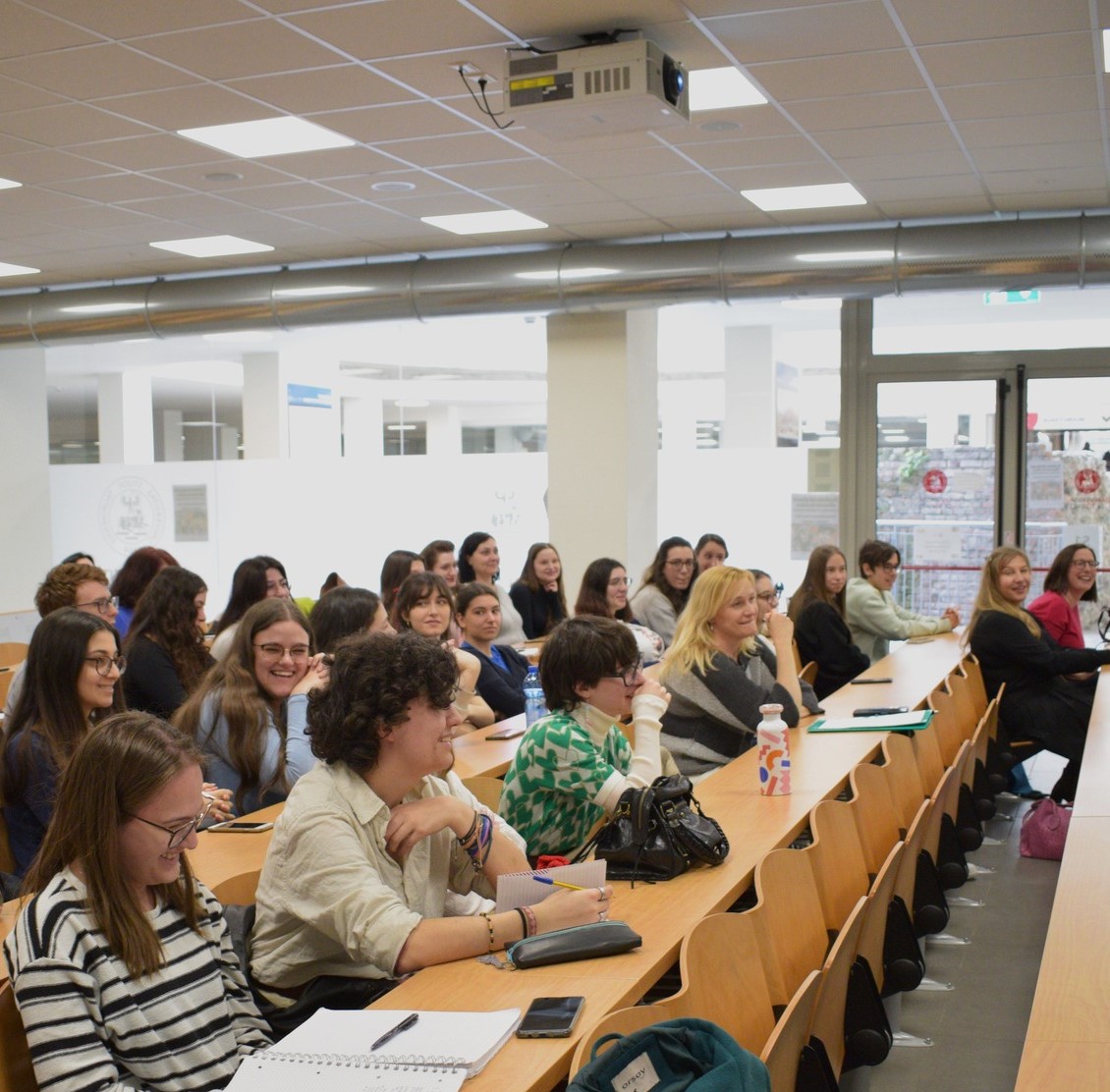
In the 2024/2025 academic year, a total of approximately 45 students attended Polish language classes and lectures, and approximately 50 attended lectures on the history of literature.
Typically, approximately one-third of the students are of Polish descent (both children from mixed families, born in Italy, and Poles who chose to study in Turin). The majority of students are Italian, but classes are also occasionally attended by East Slavs (individual cases) or representatives of other nationalities (for example, last year, several Arabs and a Chinese).
Recent projects and conferences organized by the Department of Polish Language and Literature at the University of Turin:
From Post-Trauma to Ecology: Contemporary Gender Narratives in Slavic Cultural Texts. (PRIN Università del Salento, Università di Roma Tor Vergata, Università di Bologna, Università di Padova Università di Torino) PRIN 2024-2025
Contemporary Slavic Women's Literature: Mythopoiesis, Post-Traumatic Biographical Writing And Meta-Autobiography(Università del Salento, Università di Roma Tor Vergata, Università di Bologna, Università di Padova Università di Torino) PRIN 2021-2023
Archiwa kultury polskiej XX wieku: Londyn – Turyn - Białystok (RID Uniwersytet w Białymstoku, Biblioteka Polska POSK w Londynie, Uniwersytet w Turynie) RID 2019-2022
(De)costruzione del mito nella letteratura femminile contemporanea in Russia e in Polonia (Università del Salento, Università di Roma Tor Vergata, Università di Bologna, Università di Torino) PRIN 2016-2019
Examples of recently implemented projects:
-
2023/2024
Młoda polszczyzna na styku kultur - promocja, wiedza, edukacja | Facebook
Obserwatorium Języka i Kultury Młodzieży - O projekcie - Obserwatorium Języka i Kultury Młodzieży
13 katedr polonistyki we Włoszech. Relacje wzmacnia Narodowa Agencja Wymiany Akademickiej
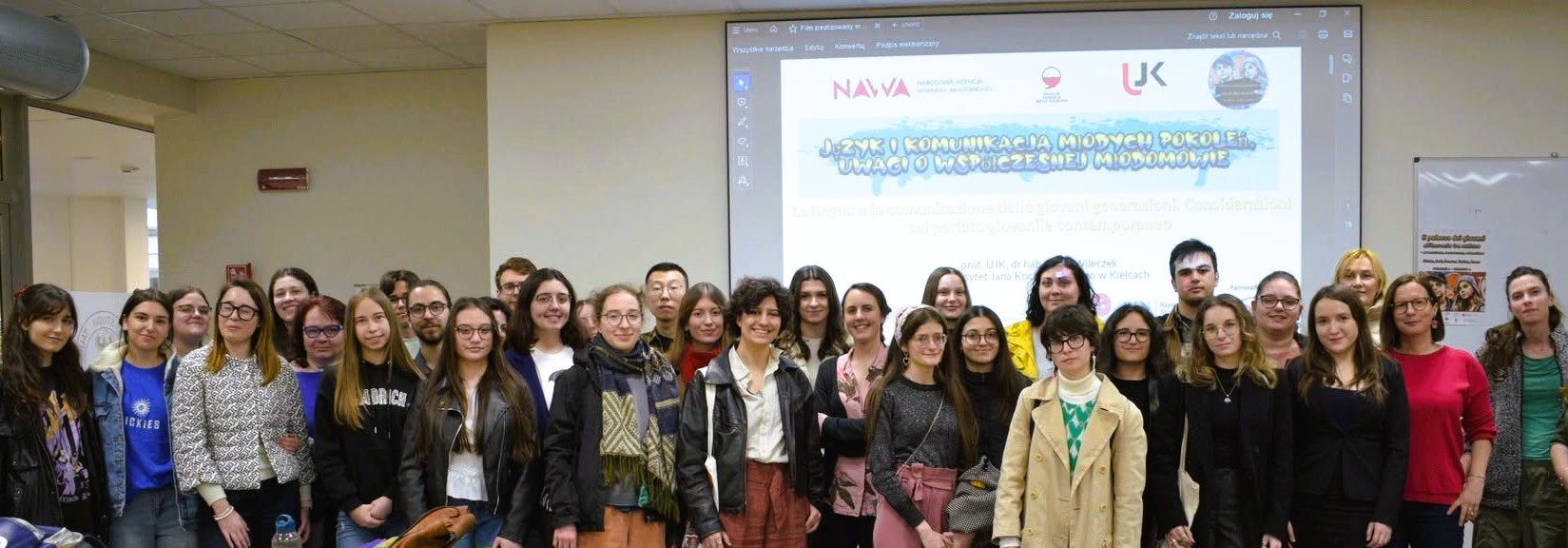
From the Rome Station of the Polish Academy of Sciences: The aim of the project, which explores youth language in the Polish-Italian context, was to expand existing research in this field, extend issues related to youth language to Italy, and identify similar and different trends in the language of young Poles and Italians.
The project, funded by the National Agency for Academic Exchange (NAWA) under the "Promotion of the Polish Language" program, was carried out by: Anna Wileczek and Anita Jagun (Jan Kochanowski University in Kielce), Alessandro Ajres (University of Bari), Urszula Marzec (University of Turin), and Karolina Kowalcze-Franiuk (University of Genoa).
More information in the links above.
-
2023
Z ziemi włoskiej do Polski Polska w pamięci! - project description
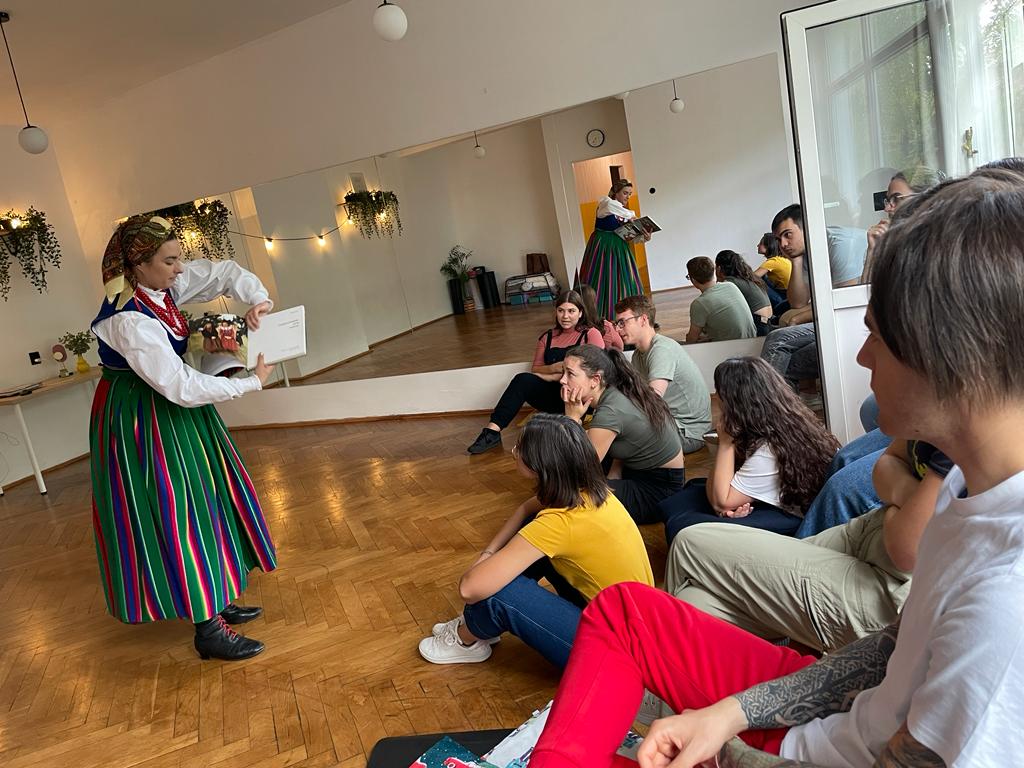
From the project website: "Poland in Memory" is a project implemented as part of the "Promotion of the Polish Language" program announced by the National Agency for Academic Exchange. The project aims to disseminate knowledge about Polish culture in the areas of literature and contemporary culture, especially music, film, and other areas of genuine interest to young people today. The proposed Polish language learning emphasizes practical communication, which is to be achieved through deep cultural immersion – participation in everyday university life, the everyday life of Poles, and familiarization with culture through participation in various social, customary, and artistic activities. Furthermore, the goal is to develop a model for further cooperation between the universities, which will allow for mutual deepening of relationships, translating experience into joint international, partnership projects.
More information on the project website.
Informacje
-
studia I stopnia
-
studia II stopnia
-
lektorat
-
studia III stopnia
-
kursy