University
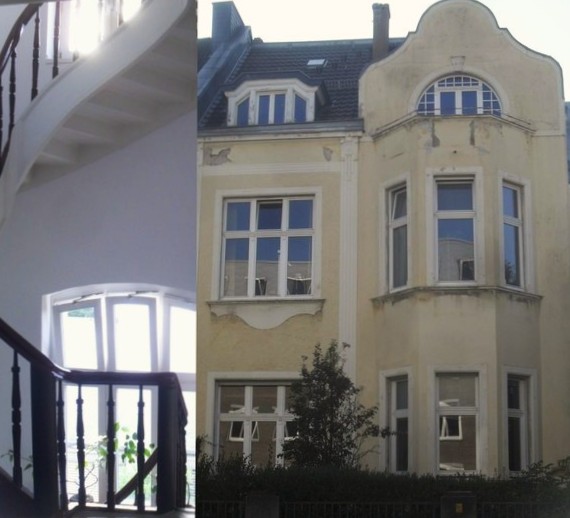
Slavic Institute (Slavisches Institut)
50931 Köln
Zobacz lokalizację na mapie "Geopolonistyka"
Nawiguj z Google Maps
The Slavic Institute at the University of Cologne offers a wide range of courses dedicated to eight Slavic linguistic communities (Bulgarian, Polish, Russian, Serbo-Croatian, Slovak, Slovenian, Ukrainian, and Church Slavonic), which are studied from the perspectives of linguistics, literary studies, and cultural studies.
The Institute operates within the Faculty of Arts and Humanities.
It offers degree programs in Slavic Studies, Russian (teacher certification), and Regional Studies of Central and Eastern Europe. It also manages Master's programs in Linguistics and Comparative Literature.
Since 2016, Dr. Jan Czarnecki has served as the lecturer for language and culture: https://slavistik.phil-fak.uni-koeln.de/ru/czarnecki.
The Institute's instructors and students conduct research on the languages, literatures, and cultures of Slavic-speaking areas within a European context. Their philological, cultural, and historical work is based on primary sources in Slavic languages; their linguistic and pedagogical work is empirically grounded and theoretically sound. Researchers are inspired by the humanistic traditions of the East and West, and their mission is to foster understanding among Slavic nations and educate for global citizenship. The primary goal of their activities is to create a space for collaborative learning and research where teachers, students, guests, and partners can contribute to the international intellectual community.
The Slavic Institute houses one of the largest Slavic libraries, containing approximately 150,000 volumes and a wide range of electronic sources. It also maintains strong international connections. The numerous research areas of the Slavic Institute include multilingualism, language contact and multilingual pedagogy, Slavic-Jewish literature, verb semantics, the afterlife of classical antiquity in Slavic cultures, sociolinguistics, the relationship between literature and listening, gender linguistics, the Slavic Enlightenment, script linguistics, word and music studies, and many others.
(Description based on the Slavic Institute website).
Informacje
-
lektorat
-
kursy