Wydarzenie
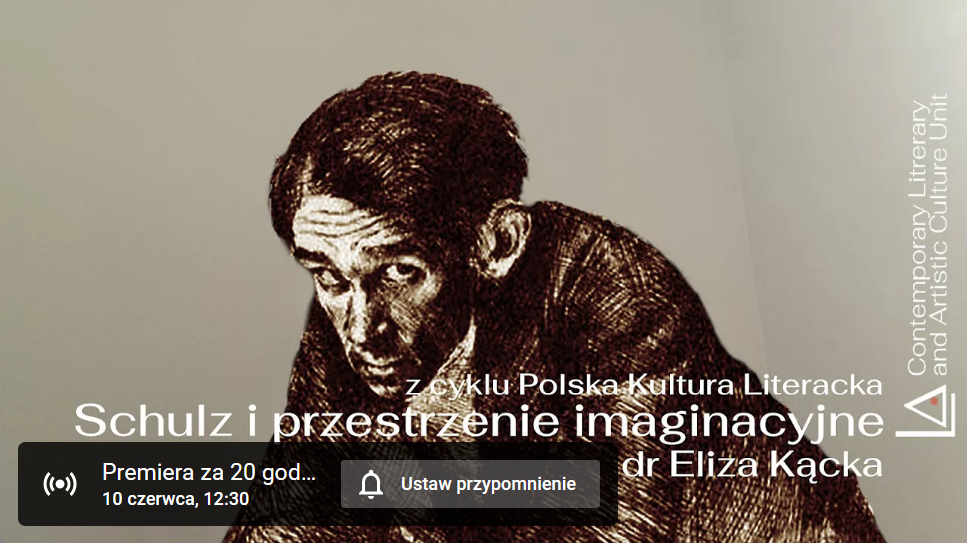
Dr Eliza Kącka: Schulz i przestrzenie imaginacyjne / z cyklu Wykłady cyfrowe na PUNO. Polska kultura literacka
10 czerwca w ramach działalności Zakładu Współczesnej Kultury Literackiej i Artystycznej Instytutu Kultury Europejskiej Polskiego Uniwersytetu na Obczyźnie w Londynie ruszają wykłady cyfrowe w dwóch cyklach: Polska Kultura Literacka oraz Kultura Artystyczna.
Z abstraktu:
“Przykładem jednego z bezkompromisowych, rewolucyjno-rewelatorskich rozwiązań pisarskich jest proza Brunona Schulza, który podporządkował swoją twórczość prawidłom wyobraźni. Nie znaczy to, by jego świat był pod każdym względem wyssany z palca. Łatwo zauważyć, że autor “Sklepów cynamonowych”, projektując swoje na poły oniryczne topografie, wskazuje jednocześnie na konkretne miasto. Niemniej jest to miasto takie, jakim je odbierało dziecko, a ową dziecięcą percepcję/świadomość próbuje zrekonstruować autor, dopuszczający się regresu do dzieciństwa.” (Eliza Kącka).
Informacje
Zobacz także
BIO/HUMANITIES: REPRESENTATIONS OF LIFE
The Centre for Advanced Studies in the Humanities at the Jagiellonian University organizes this conference and seminar series in collaboration with national and international partners (Postcolonial Studies Centre, University of Wrocław; Department of Polish, Russian, and Lithuanian Studies, University of Illinois Chicago). It is part of the ongoing work of the bio.humanistyka research group.
Scraps... Reading Residuality
In colloquial English crap is “nonsense, rubbish”; crappy is “rubbishy” or “disgusting”. Crap is “faeces”, with the verb “to crap” meaning “to defecate”. It is this far more common use of the word crap that the audience cannot fall to bring to mind in relation to the play. All the associations merge in this overriding definition of crap as excrement and waste. The tapes that Krapp has accumulated during his lifetime, are these all just waste, just crap? The “memorable equinox” about which the thirty-nine-year-old Krapp is so enthusiastic, is this just rubbish, meaningless, crap?
"Kot w mokrej trawie" Kornela Filipowicza – między czytaniem a tłumaczeniem
Serdecznie zapraszamy na czwarte spotkanie z cyklu „Czytanie Filipowicza". W fascynujący świat twórczości pisarza tym razem wejdziemy podczas rozmowy z Anną Zaranko, tłumaczką twórczość Filipowicza na język angielski.
Literature in Exile Between ‘Authorship’ and ‘Translation’: The Central and Eastern European Experience
This conference aims to examine the complex relationship between ‘authorship’ and ‘translation’ in the work of the 20th-century Central and Eastern European writers in exile who were also translators. In the context of the reassessment of ‘literariness’ in the latter half of the 20th century, the conference is particularly focused on the overlapping relationship between both these concepts, which are seen as interrelated, historically variable categories of literary creativity of exiled writers in redefining themselves against the nationalist narratives. The workshop will thus contribute to the discussion on cultural translation and post-national literature in general.