«Enseigner et promouvoir la langue et la culture polonaise». Ves Assises de la langue et de la culture polonaises en France / "Nauczanie i promowanie języka polskiego oraz kultury polskiej". V Kongres polonistów francuskich
The Congress of French Polonists is a cyclical event organized since 2001 on the initiative of the French Association of Polonists - Société Française d’Études Polonaises. Every year, teachers, researchers, and experts involved in teaching the Polish language in France meet to exchange experiences, present their research and projects, and discuss the promotion of Polish language, literature, and culture in the Francophone world.
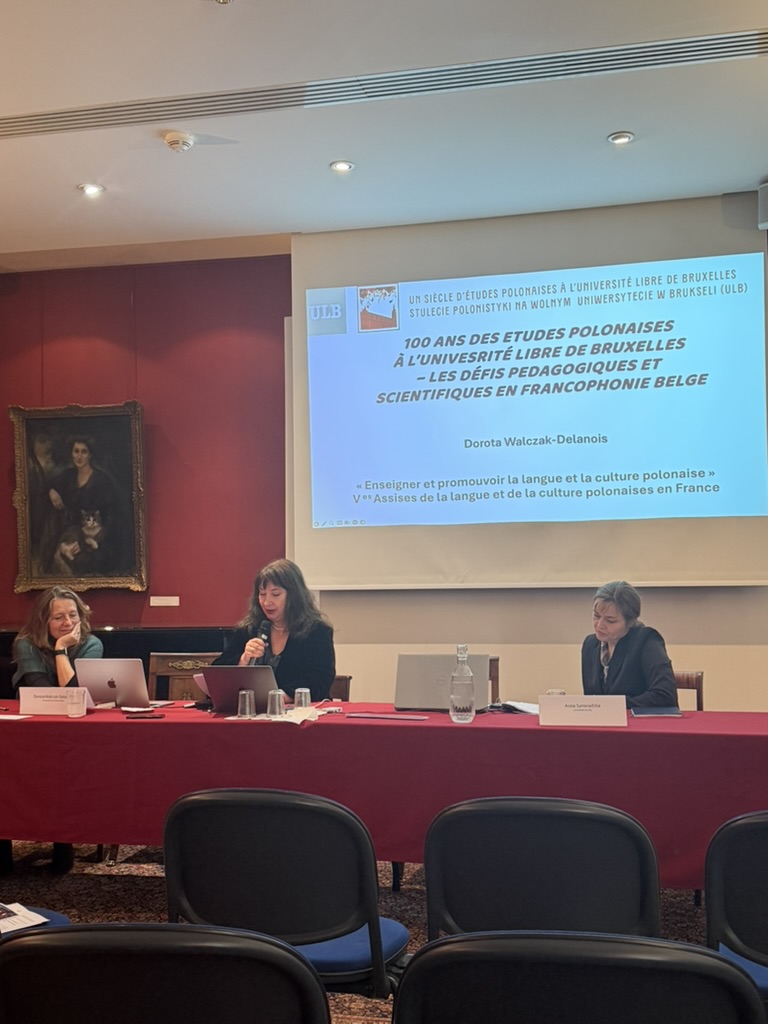
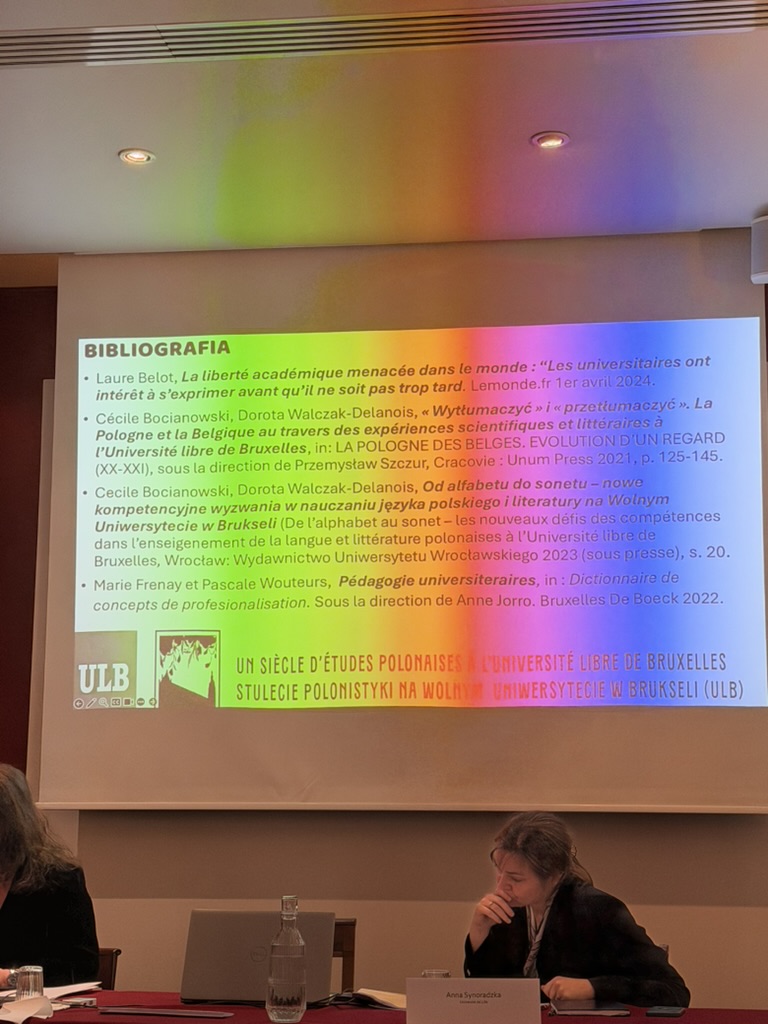
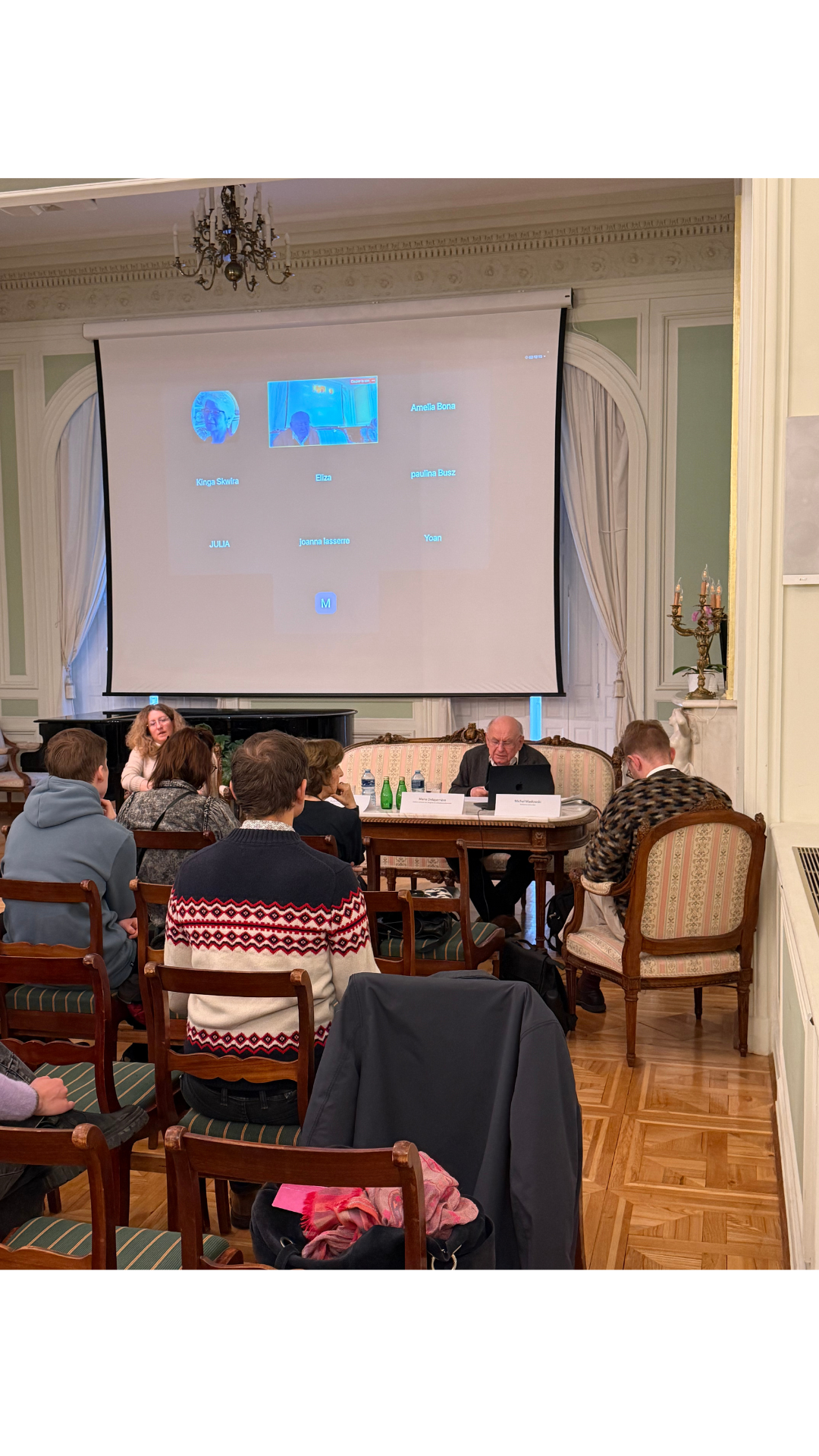
The program for this year's edition of the Congress, held under the theme "Teaching and Promoting Polish Language and Culture" (Enseigner et promouvoir la langue et la culture polonaise), included presentations on didactics, literature, history, and the activities of institutions supporting Polish studies in France. An important topic was the presence of the Polish language in the educational offer of French schools and universities, as well as efforts toward greater linguistic diversity. NAWA lecturers participated in the congress both on-site and online.
On November 19, the venue for the deliberations was Lycée Montaigne. On November 20, it was at the Bibliothèque Polonaise de Paris (Polish Library in Paris). On the final day of the Congress, November 21, participants deliberated at the Académie Polonaise des Sciences – Centre Scientifique à Paris (Polish Academy of Sciences – Scientific Centre in Paris).
The program of the Congress of French Polonists was designed in the form of thematic panels, which fostered not only the presentation of research and projects but also in-depth discussion on the current state and future of Polish studies in France. The individual panels focused on didactic, literary, institutional, and cultural issues, showcasing a wide spectrum of activities undertaken for the teaching and promotion of the Polish language.
Day One – November 19
The first day of the Congress had an institutional and educational character, focusing primarily on the presence of the Polish language in the French school system—at the primary and secondary levels. The proceedings were opened by official speeches from representatives of French and Polish institutions, highlighting the importance of teaching the Polish language in the context of European linguistic diversity and Polish-French cooperation. The inaugural speeches repeatedly touched upon the theme of the continuity and stability of Polish studies, as well as the need for its further strengthening.
The first panel was dedicated to Polish language teaching practices in French schools, with particular emphasis on international sections. The presentation by Danuta Charlon and Agnieszka Sygowska-Kalmus, dedicated to the twentieth anniversary of the Polish international section at Lycée Montaigne, showed it as a permanent and recognizable element of the French educational landscape and an example of successful institutional cooperation.
Subsequent papers concerned the presence of the Polish language in the Nord-Pas-de-Calais region and the Paris region. Speakers not only presented data and didactic experiences but also pointed to regional inequalities, variability in teaching conditions, and the role of the individual commitment of teachers.
The afternoon part of the panel focused on specific didactic practices implemented at Lycée Montaigne, both within elective classes and artistic projects. The day closed with a performative-educational meeting: a theatrical experience based on a text by Witold Gombrowicz, serving as an example of dialogue between literature, theater, and language didactics.
Day Two – November 20
The second day of the Congress was marked by institutions, networks, and the history of Polish studies in various European countries. The panels were more comparative and reflective in nature, and alongside France, Belgian and Swiss perspectives were also presented.
The panel opened with a presentation by Magdalena Popiel dedicated to the Geopolonistics project, which introduced reflection on the global distribution of Polish study centers and their significance for the promotion of Polish language and culture. This presentation served as an important point of reference for subsequent papers, portraying Polish studies as a network of institutional connections rather than a collection of isolated initiatives.
Speakers from Brussels, Fribourg, Nancy, Lille, and Clermont-Ferrand presented local histories and current challenges in teaching the Polish language, emphasizing the role of universities as places for long-term maintenance of the presence of the Polish language in the academic space.
In the second part of the panel, presentations by representatives of institutions supporting Polish studies were of particular importance. Dr. Mariusz Czech presented the activities of NAWA as a systemic support base for teaching and promoting the Polish language abroad, while Anna Rudek-Śmiechowska discussed the goals and tasks of the POLONIKA Institute regarding the protection of Polish cultural heritage outside the country. Both presentations were met with lively discussion and numerous questions from the participants.
An essential addition was the presentation by Prof. Elżbieta Awramiuk regarding the planned reform of Polish orthography, which aroused great interest among educators teaching Polish as a foreign language.
The day concluded with a doctoral student discussion in the form of a round table, showcasing the young generation of Polish studies researchers in an international context and confirming the continuity of research on the Polish language and culture in the Francophone environment.
Day Three – November 21
The final day of the Congress was dedicated to teaching methods, didactic reflection, and translation practice.
The presentations in the first panel concerned, among other things, the role of photography in language teaching, the teacher's relationship with new technologies (including artificial intelligence), and the inseparable connection between language and literature in Polish didactics. Speakers emphasized the need to combine theoretical reflection with didactic practice tailored to diverse groups of recipients.
A special place was held by the presentation of the project "Polish Among Languages," addressed to Polish language lecturers abroad, as well as presentations dedicated to teaching Polish in peripheral, multilingual, and specialized contexts (e.g., among Yiddishists).
In the second part of the panel, issues of grammar, language norms, native speakers' errors, and forms of student support, such as peer tutoring, were discussed.
The final panel of the Congress was devoted to translation as a didactic and creative tool. Participants had the opportunity to take part in literary translation workshops, listen to reflections on the role of craftsmanship in translation, and on the specifics of comic book translation, where poetry, image, and language meet.
This panel summarized the Congress in a symbolic way, showing translation as a space for the meeting of languages, cultures, and competences—exactly what the Assises had been creating for three days.
Summary of the Congress
The Congress of French Polonists was a consistently bilingual event, celebrating both Polish and French, as well as the natural switching between language codes characteristic of the daily didactic and research practice of Polonists operating abroad. The presence of students, doctoral candidates, teachers, and researchers—both of Polish roots and from other linguistic backgrounds—confirmed that Polish studies in France remain a living, dynamic field of research, teaching, and reflection on multilingualism.
For the participant of the research visit in France, the Congress became a source of up-to-date knowledge about the state of French Polish studies. It enabled the establishment and deepening of contacts with representatives of the most important academic and institutional centers in France and Belgium, which will be developed in subsequent stages of the project, e.g., through invitations to a podcast. During the Congress, a geo-Polonistic survey was distributed, which allowed for the acquisition of new potential entries and the updating of data concerning the functioning of Polish studies in the Francophone space.
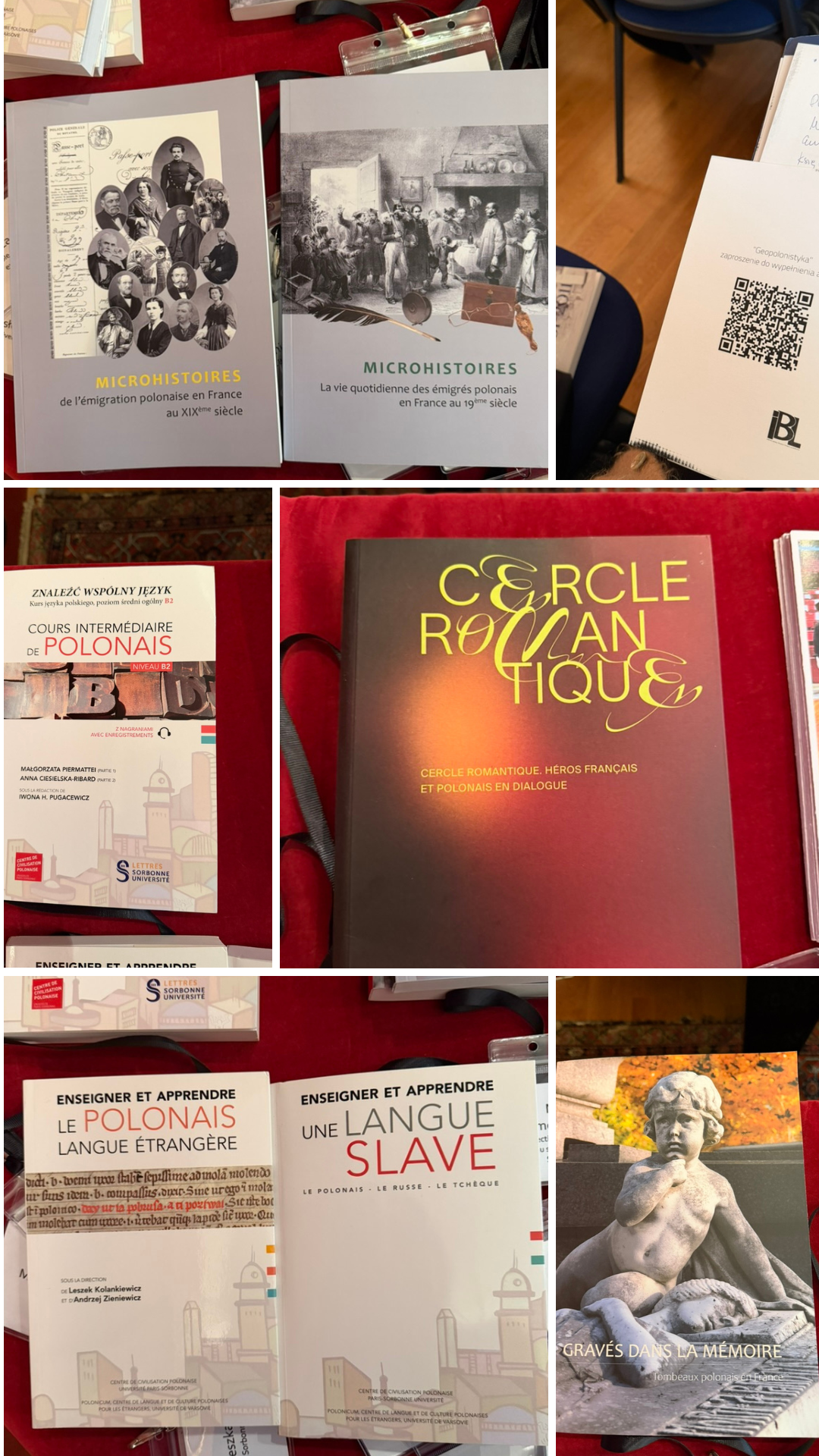
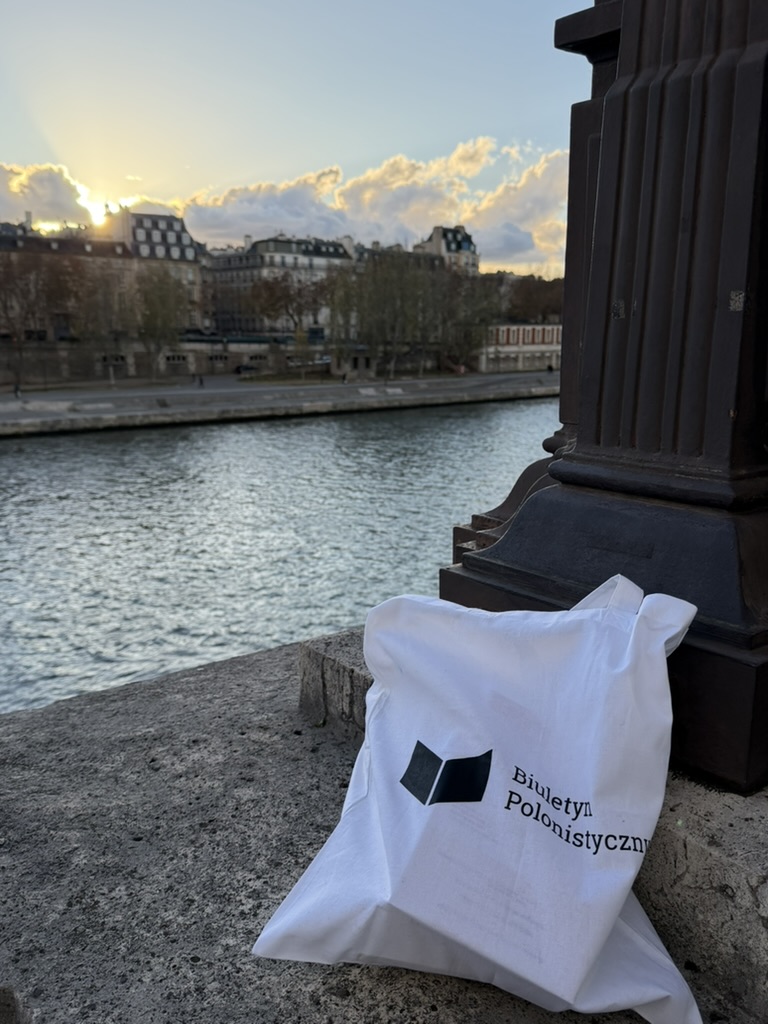
A particularly significant result of the research visit was the acquisition of unique archival materials, including a set of four earlier post-conference publications from the Congress of French Polonists, which are not available in digital versions. These publications now constitute an important source for research on the history of French Polish studies, documenting its development, curriculum changes, and collaboration networks over recent years. Participation in the Congress also allowed for the collection of materials for the "Polonistic Bulletin" and the identification of new topics and interlocutors relevant from the perspective of further research on the presence of Polish language and culture abroad. As a result, the participant returned to Warsaw not only with a rich resource of bibliographic and archival materials but also with a network of contacts and a deepened recognition of the environment of contemporary French Polish studies.
Partners and Organizers of the Congress
The organizer of the Vth Congress of French Polonists was the French Association of Polonists, in cooperation with Sorbonne University, the Centre for Polish Language and Culture at the University of Warsaw, the Institute of Polish Studies at the University of Warsaw, the Bibliothèque Polonaise de Paris, the Paris branch of the Polish Academy of Sciences, and Lycée Montaigne in Paris. The event was supported by the Embassy of the Republic of Poland in France, at whose headquarters a formal cocktail reception for the guests of the Congress was held on the first day.
Publication created as part of the project „Polonistyka wobec wyzwań współczesnego świata” ["Polish Studies in the face of the challenges of the contemporary world"], co-financed by the state budget under the program of the Minister of Science and Higher Education called "Science for Society II" (project number: NdS-II/SP/0264/2024/01).
Project website: https://biuletynpolonistyczny.pl/pl/projects/polonistyka-wobec-wyzwan-wspolczesnego-swiata,1851/details
Informacje
Zobacz także
Ladislas Mickiewicz. Les esquisses pour un portrait à l’occasion du centenaire de sa mort / Colloque international
Ce colloque international, organisé à l’occasion du centenaire de la mort de Ladislas Mickiewicz, propose de porter un regard renouvelé sur une figure longtemps demeurée dans l’ombre de l’héritage paternel. Fils d’Adam Mickiewicz, écrivain, éditeur, passeur culturel, mémorialiste, acteur de la vie intellectuelle de l’émigration polonaise et gardien de la mémoire romantique, Ladislas Mickiewicz apparaît ici comme un médiateur essentiel entre les cultures européennes des XIXe et XXe siècles. Le titre du colloque, emprunté à une formule de Ladislas lui-même, « Lorsqu’on n’a guère d’autre mérite ici-bas que d’avoir eu un père célèbre », invite à interroger les tensions entre filiation, identité personnelle, mémoire et construction d’une autorité intellectuelle propre.
Central Europe and Francophone Spaces: Transfers and Borders / Special Issue of Contemporary French & Francophone Studies/SITES
Co-Editors: Roger Celestin, Michal Obszynski, Niv Schvartz Aimé Césaire, Jean-Paul Sartre, and Simone de Beauvoir in Warsaw; René Depestre and Albert Camus in Prague; Witold Gombrowicz in Nice; Milan Kundera, Andrzej Żuławski, Krzysztof Kieślowski, François Fejtő, and István Szabó in Paris; Brassaï and Béla Bartók in Belgium; Ryszard Kapuściński in Francophone Africa; Jerzy Grotowski in Haiti… and so many others. From Warsaw to Paris, from Budapest to Quebec, from Prague to Port-au-Prince, a geography takes shape in which people and languages travel with their ideas (and ideals), their literary and artistic practices, but also their wounds and their capacity for reinvention. This space — stretching from Central Europe to the farthest reaches of the Francophone world, at once political, intellectual, social, and cultural — is neither homogeneous nor stable.
Building the Avant-Garde Abroad: East-Central European Artists in Paris / Construire l’avant-garde en exil: artistes d’Europe du Centre-Est à Paris
W dniach 18–19 września 2026 roku w Bibliotece Polskiej w Paryżu oraz Centrum Badawczym Uniwersytetu Sorbońskiego (Maison de la Recherche – Sorbonne Université) odbędzie się międzynarodowa konferencja poświęcona związkom paryskiej awangardy z artystami i pisarzami z Europy Środkowo-Wschodniej działającymi we Francji po I wojnie światowej. Inspiracją dla konferencji jest życie i twórczość Jana Brzękowskiego – poety, prozaika i krytyka związanego z paryskimi środowiskami artystycznymi. Wśród podejmowanych zagadnień znajdą się m.in. doświadczenie emigracji, wielojęzyczność i dwukulturowość twórców, sieci współpracy artystycznej, rola pośredników kulturowych oraz losy rozproszonych archiwów emigracyjnych.
Nauka – Wymiana – Oddziaływanie. Bracia Mniszech w Szwajcarii
Międzynarodowa konferencja naukowa Nauka – Wymiana – Oddziaływanie. Bracia Mniszech w Szwajcarii podejmuje tematykę wymiany intelektualnej i cywilizacyjnej między Polską a Szwajcarią w XVIII wieku przez pryzmat edukacyjnego pobytu w Szwajcarii Józefa i Michała, braci Mniszech, a w szczególności ich podróży po górzystych częściach kantonu Neuchâtel, kolebki szwajcarskiego przemysłu zegarmistrzowskiego.