Artykuł / wywiad
Priceless testimonies of the landscape, or environmental literary history in practice (part 2)
Klaudia Węgrzyn talks to Dr. Marcin Buczyński, the initiating editor of the University of Silesia Publishing House.
Klaudia Węgrzyn: Is there a clear representation of "Silesian" topics in the books and monographs published by the University of Silesia Publishing House? How often do the keywords "Silesian"/"in Silesia"/"in the region" appear in titles?
Marcin Buczyński: For years, the topic of Silesia and Silesianness has been present at the university and in the publishing house's publications. We can begin with an absolutely unique and outstanding book, Stefan Szymutko's Nagrobek ciotki Cili Stefana Szymutki ("The Tomb of Aunt Cili") (2001), whose author declared that he wanted to be for Mysłowice what James Joyce was for Dublin. I think he fulfilled this task quite well, since he is still quoted, for example, by Professor Ryszard Koziołek in the "Książka na scenę" podcast.
Our publishing house publishes also books about local heroes, such as Gustaw Morcinek – we offer both a book on his work, commemorating his 120th birthday, and books from the "Czytaj po polsku" (Read in Polish) series, designed for those learning Polish. An interesting initiative is the comic book S jak Śląsk – superbohaterowie po śląsku (S jak Śląsk – superheroes in Silesian style).
The authors of our books also draw attention to the challenging history of Poland's most industrialized region. Hence, Jolanta Wadowska-Król's book Ołowicze światy Śląska. W strefie chorób poprzemysłowych (Saturnine Worlds of Silesia: In the Zone of Post-Industrial Diseases) which examines the poisonous nature of the lead smelter in Katowice's Szopienice district. Such works not only highlight the serious problems Silesia faced not so long ago, but also—by drawing attention to a specific part of Silesia (in this case, Szopienice)—increase interest in a given place. The multi-authored monograph primarily concerns the story of Jolanta Wadowska-Król, who diagnosed lead poisoning in children and began treating it despite the opposition of the communist authorities. It is enriched by transcripts from two conference panel discussions. The publication culminates in works by students inspired by the life and work of the "familok doctor," created during a series of workshops. The publication is part of the “Kairos – Environmental Humanities” series and is available in open access on the website of the University of Silesia Publishing House.
Recently, sociologists have been increasingly interested in the topic of metropolises, which is not surprising, considering we are the largest urban center in Poland, and plans are underway to create a supercity—merging the Silesian and Zagłębie communes into one. It's clear that this process isn't easy and is fraught with challenges. So far, for example, the number of buses serving the region has increased, and in addition to new city lines, buses marked "M" have also been created, serving routes covering most of the metropolitan communes. The very designation of the region as a metropolis also speaks volumes about the changes afoot. The institution GZM - Górnośląsko Zagłębiowska Metropolia (Upper Silesian Zagłębie Metropolis) was established to coordinate efforts to build a single city. The monograph Konstruowanie metropolii. Pomiędzy instytucją a przestrzenią społecznej narracji (Constructing a Metropolis: Between Institution and the Space of Social Narrative), currently in preparation, will serve as a testament to these considerations.
On the initiative of the School of Polish Language and Culture, we publish textbooks for learning the Silesian language, the series is titled: Moje piyrsze ślōnske słowa (My first Silesian words) and is a reaction to the growing popularity of the Silesian language.
K.W.: How does the topic of post-industrial Silesia fit into environmental humanities and ecocritical research? There are growing debates about what to do with land adjacent to mines and steelworks; some waste heaps are being revitalized, others are being "returned" to nature. How are these topics being researched and published?
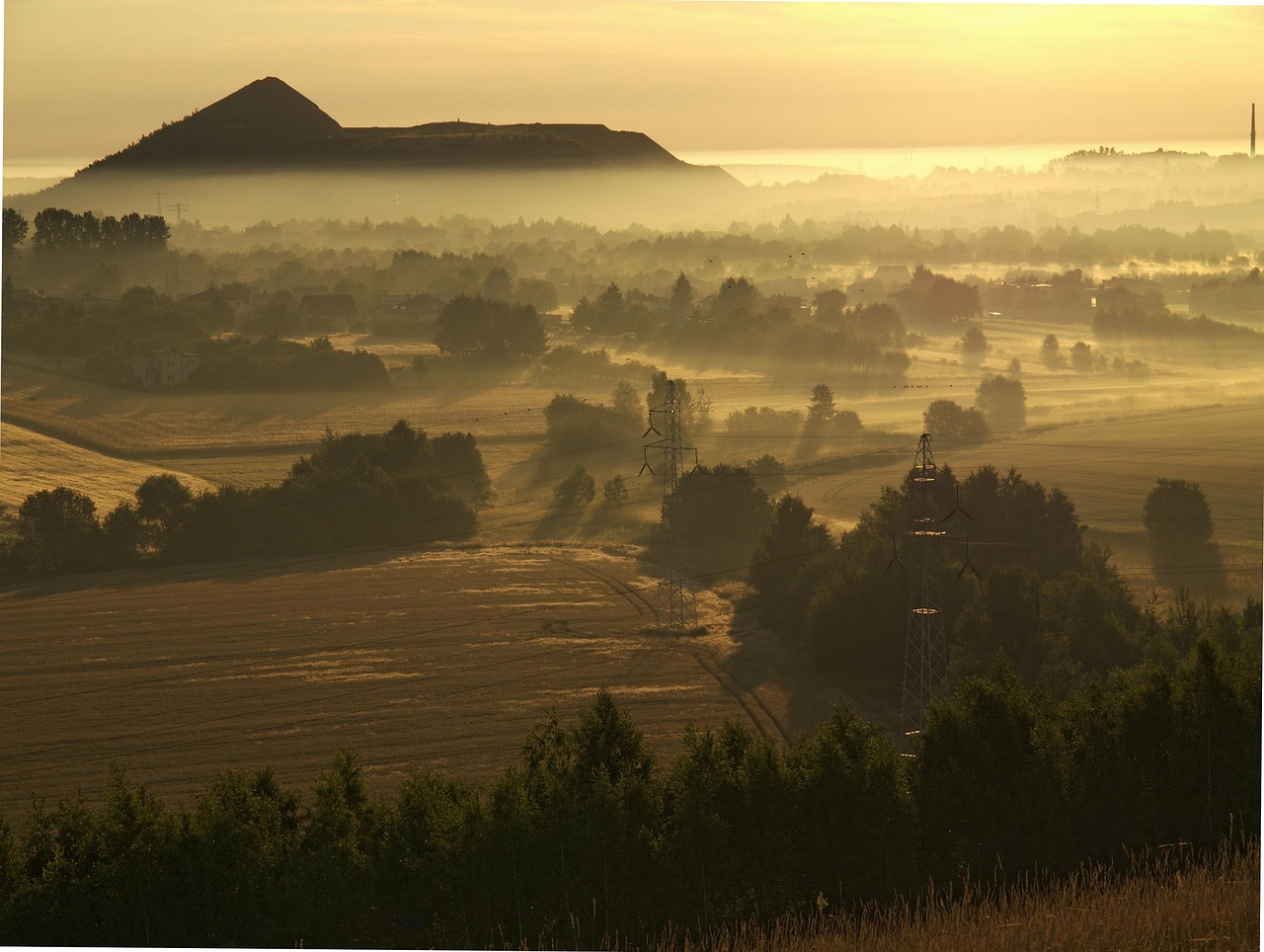
M.B.: You've hit on the heart of our publishing activities in recent years and the interests of our authors. I'll mention two titles that demonstrate how one thing that distinguishes our region can offer a broad cognitive horizon. Namely, coal. We offer a book titled Hałda. O śląskiej wyobraźni symbolicznej (Slag heap: On the Silesian Symbolic Imagination). This book interprets literary works that established Silesia—not just the heap—as a hero. For those who might be reading this and live in places like Nowy Sącz or Lublin, I should add that the heap is an expression of the Silesians' longing to live among the mountains. Since we live exclusively in the highlands, not in the mountains, we must have built our own mountains from mine waste. In Silesian, we don't say hałda (slag heap), but hołda or berga. The latter word comes from the German word "góra," (hill) so Silesian mountains are heaps. The tallest of them – Szarlota in Rydułtowy – rises over 400 meters above sea level, measuring 134 meters from base to peak. For me, slag heaps are the most incredible feature of Silesia. Perhaps because they are absolutely paradoxical and invert our way of thinking about being and non-being, life and non-life. A slag heap lives until it is heaped up. Its life is linked to the mechanical addition of successive elements: from base to peak. It dies when this movement is stopped. And only then does new life appear: plants, animals, fungi. There's something in the beauty of a slag heap akin to Wiesław Myśliwski's line at the end of the first part of Kamień na kamieniu (Stone on Stone): "Life has returned to the cemetery." Life appears on a slag heap after its death.
The second book I'd like to discuss in the ecocritical vein is Marta and Paweł Tomczok's translation of Ralph Crane's book "Węgiel. Natura i kultura" (Coal. Nature and culture). The underground stone thus becomes the protagonist of a book that demonstrates how "black gold" has shaped not only areas like Silesia but every corner of the globe over the past decades, and is represented in numerous cultural texts. Paweł Tomczok discusses this beautifully in an episode of the University of Silesia podcast: Surowiec, który rozpalił świat [The raw material that ignited the World]
K.W.: The cultural history of coal is likely told somewhat differently than its historical and archival accounts. What can coal tell us about Silesia? And how can environmental humanities tell the story of Silesia?
M.B.: What is probably most interesting for a humanist in the cultural history of coal is its presence in painting, literature, and film. Inside the book, we can find reproductions of paintings, excerpts from novels, and film stills. Consider this: nowhere outside Upper Silesia will we have such a powerful experience of coal's presence. In the late 1990s, I participated as an audience member in a one-poem competition in Gliwice, where a poem with the phrase "Witaj górniku z czarny gwiazd" (Welcome, miner from the black wall) received a distinction. It was a tribute to those descending into the mine—to hell—and this isn't a metaphor, but literally: to hell. I'm convinced that in Kraków, Wrocław, Warsaw, Białystok, Gdańsk, or Szczecin, this work would have evoked—at most—a mocking smile on the jury's faces. Yes, the work was pathetic, but at the same time incredibly empathetic and warm. It just couldn't reach people outside Silesia. Where else can you sing the praises of a farmer's work against a backdrop of willows, a river, and a hill with a grazing cow—three elements, and you have a bucolic tale; in Silesia, you should sing the praises of a miner: black with dust against the blackness of a stuffy, hot corridor. This, in turn, is the aesthetic of horror. It's fair to say, then, that in Silesia we're up to speed on taming fears.
Another aspect—perhaps the most important in this book, in my opinion—is the discussion of coal tourism, that is, traveling along the trail of mines, spoil heaps, and workers' settlements. Here again, a book by an Australian academic lecturing in Tasmania demonstrates what makes Silesia stand out among other Polish regions. I myself am a fan of trips to workers' settlements, and we have quite a few of them in both Silesia and the Zagłębie region, and they are quite beautiful. I'll mention two exceptional neighborhoods: one is Zantka in Zabrze, where each house has its own distinctive details; the other is the Piaski district in Czeladź. The latter is not only beautiful but also very well integrated thanks to the local football team: Górnik Piaski, the pride of the district. While the author of "Węgiel" doesn't write about football, I think someone should attempt such a book and describe the connections between coal-related culture and football. In any case, I highly recommend this part of Ralph Crane's book and practicing coal tourism - the spoil heaps are waiting to be conquered, the workers' settlements to be seen, and the mines after the end of extraction for our underground experience.
K.W.: One of the most interesting effects of environmental humanities, as practiced at the University of Silesia, for example, is transcending the classically understood academy: not only in thinking between the lines, multimedia, and disciplines—but quite literally—in transcending its walls. The slag heaps and other post-industrial areas you described become venues for lectures and workshops. While also collaborating with the University of Silesia, you participated in the project „Transformersi w szkołach – edukacja na rzecz zielonej transformacji i zachowania kultury górniczej w regionie” ("Transformers in schools – education for green transformation and preserving mining culture in the region") What did this field-based collaboration between schools and academia look like?
M.B.: Wonderful. Many people from various departments and units are involved in the entire project. The "Transformers" project aims to show young people from various schools in the region the importance of post-industrial heritage. To this end, we visit various places, such as the Wujek Mine with its tragic history and the nine miners killed, or Szopienice and the remains of the Non-Ferrous Metals Smelter: the dilapidated management building and the water tower. We also admire murals, which often allude to the idea that industry draws heavily from nature, and that humans – although the builders of civilization – cannot detach themselves from nature. This is a lesson not only for young people but for all of us.
K.W.: In what other ways – apart from academic books – is environmental and post-industrial locality addressed, for example in Katowice itself?
M.B.: At the end of last year, the BWA Gallery in Katowice hosted, for example, an exhibition of Hilary Krzysztofiak's paintings, Hilary – Planet of Non-Ferrous Metals, which artistically referenced the Szopienice district. The exhibition was curated by our artists: Professor Marta Tomczok and Professor Lucyna Sadzikowska.
The eighth edition of the Silesian Science Festival consistently addresses themes of the environment and industry, dedicating an entire stage in the Nature District to these topics. In 2024, discussions such as Mapowanie kultury węgla (Mapping Coal Culture) and O dziedzictwie poprzemysłowym ekokrytycznie (On post-industrial heritage ecocritically) were held there.
Mały Festiwal Wielkiej Literatury (The Little Festival of Great Literature), initiated by Marcin Musiał, deserves special mention. Thanks to him and his invited guests, Katowice is becoming the literary capital of Silesia. It's a tedious and difficult process, as both the organizer and Zbigniew Rokita discussed at the festival: "In Katowice's efforts to become European Capital of Culture, the world of literature seems largely overlooked, which is why the festival itself was created as a grassroots initiative. However, in Katowice, you can count on a large readership of local authors: they actively engage in cultural and environmental activities. The “Podziel się dzielnicą” (Share Your Neighborhood) walks walks, during which residents of a given district become guides to local identity, are also becoming increasingly popular. Katowice residents – and perhaps even Silesians more broadly (including those visiting) – are very curious about the history of the region and the environment, and about learning how to care for them in the future."
Publication created as part of the project „Polonistyka wobec wyzwań współczesnego świata” ["Polish Studies in the face of the challenges of the contemporary world"], co-financed by the state budget under the program of the Minister of Science and Higher Education called "Science for Society II" (project number: NdS-II/SP/0264/2024/01).
Informacje
Od lat związany z edukacją szkolną, aktualnie z akademicką: prowadzi warsztaty i zajęcia terenowe związane z dziedzictwem industrialnym Górnego Śląska; moderuje debaty i spotkania autorskie – te w Akademii i poza nią. Wielbiciel hałd i stały bywalec osiedli robotniczych oraz stadionów ósmej ligi.
Afiliacja: Szkoła Doktorska, Wydział Humanistyczny, Uniwersytet Śląski w Katowicach
Udział w projektach:
- od 2024: Polonistyka wobec wyzwań współczesnego świata;
- Edycja krytyczna listów i archiwalnych materiałów piśmiennych więźniów obozów koncentracyjnych (Stutthof, Gross-Rosen, Auschwitz);
- 2018-2019: Światowa historia literatury polskiej. Interpretacje (Narodowy Program Rozwoju Humanistyki); Traces. Awkward Objects of Genocide (European Union’s Horizon 2020)
Witryny:
https://silesian.academia.edu/klaudiawegrzyn
https://klaudiakwegrzyn.wixsite.com/portfolio
Publikacje (wybrane):
- Pamięć (za)chowana w ciele. Prześnione powroty w "Pogrzebie kartofla" , "The Polish Journal of the Arts and Culture. New Series" 14 (2/2021);
- (Auto)portret w pękniętym zwierciadle. Czuła narracja, trauma i podmiotowość w czarnej komedii "Kidding", w: Artyst(k)a: czuły narrator. Wcielenia oraz interpretacje czwartoosobowej perspektywy w tekstach kultury, red. M. Popiel, K. Węgrzyn, Kraków 2021;
- Kant by się uśmiał, czyli co łączy amerykański sitcom z filozofią moralności i etyką, w: Komizm w kulturze popularnej. Funkcje, interpretacje, kontrowersje, red. D. Ciesielska, M. Kozyra, A. Łozińska, Kraków 2020;
- Archeologia antyfotografii. Wywoływanie zdjęć i widm z Sanoka w pracach Jerzego Lewczyńskiego oraz Zdzisława Beksińskiego, w: Pamięć, obraz, projekcja, red. A. Ścibior, Kraków 2020;
- (S)przeciw milczeniu. Tabu, sieroctwo i dorastanie w serialowej adaptacji "Ani z Zielonego Wzgórza" , “Maska” 41/2019
- Inna strona. Wizualność i wizualizacja obcości w filmach Jana Jakuba Kolskiego, w: Inność? Obcość? Norma?, red. K. Zakrzewska, Warszawa 2018;
- Teatralne prymicje czarownicy z Krakowa. Rozkwitający feminizm w wybranych dramatach Pawlikowskiej-Jasnorzewskiej, "Zagadnienia Rodzajów Literackich" 60/122 2017;
- Gest autobiograficzny. Okrutny teatr fotografii Zdzisława Beksińskiego, "Widok. Teorie i praktyki kultury wizualnej" 12/2015.
Zobacz także
Priceless testimonies of landscape, or environmental literary history in practice
Klaudia Węgrzyn talks to Dr. Hab. Marta Tomczok, Professor at the University of Silesia.
A different view of the competencies of a Polish studies scholar
For many years now, we've been told that the world is rushing and change is inevitable. New phenomena and trends—technology, artificial intelligence, social media—go hand in hand with eternal questions about the meaning and direction of existence, the uncertainty of tomorrow, the inability to keep up with changes, the need to preserve the human element in a world of algorithms and procedures.
Art in the Places of Death. An interview with Prof. Halina Taborska
"Halina Taborska's book (...) is a peculiar study of the aesthetics of an anti-humanistic act. In fact it introduces such "aesthetics" to the readers, and we are presented with a very carefully prepared documentation of various objects, material and spatial shapes, "installations", murals, museum organizations and documentary activities. These are various shapes in the public space which mediate our perception of an unimaginable crime or "blinding” shapes that protect us from the damages of seeing it again. By bringing this collection of practices together, the book shows their character and multiplicity. The research material gathered in the publication and the scholarly approach make it a must-read not only in the study of war crimes in Europe, but also in the study of symbolic representation of mass crimes - especially in the field of cultural studies, cultural anthropology and art history.” (Prof. Jan Stanisław Wojciechowski, Academy of Fine Arts in Warsaw - excerpt from the review on the cover).
Polish studies outside Europe: history and perspectives of Polish studies in selected Latin American and East Asian countries
The proposed article aims to identify the origins of Polish studies centers operating outside Europe, i.e., in Latin America (with particular emphasis on Brazil and Argentina) and East Asia (primarily in Japan, China, and South Korea), and to compare their contemporary challenges. The proposed topic represents a significant contribution to the development of the "Geopolonistyka" (Geopolonistics) project, as it stems from the need to reflect on the nature and role of Polish studies outside Europe and provides an in-depth analysis of their functioning in distant and diverse sociocultural contexts. This approach will expand the global map of Polish studies centers to include institutions less frequently discussed in public discussions of Polish language and culture studies. This publication may, to some extent, contribute to the integration of Polish studies communities worldwide, supporting the main objectives of the "Geopolonistyka" project. It may also become a starting point for further research on the global reach and dynamics of Polish studies. It is also a response to the growing interest in research on global Polish studies, which is developing within the framework of comparative Polish studies and glottodidactics.