Projekt badawczy
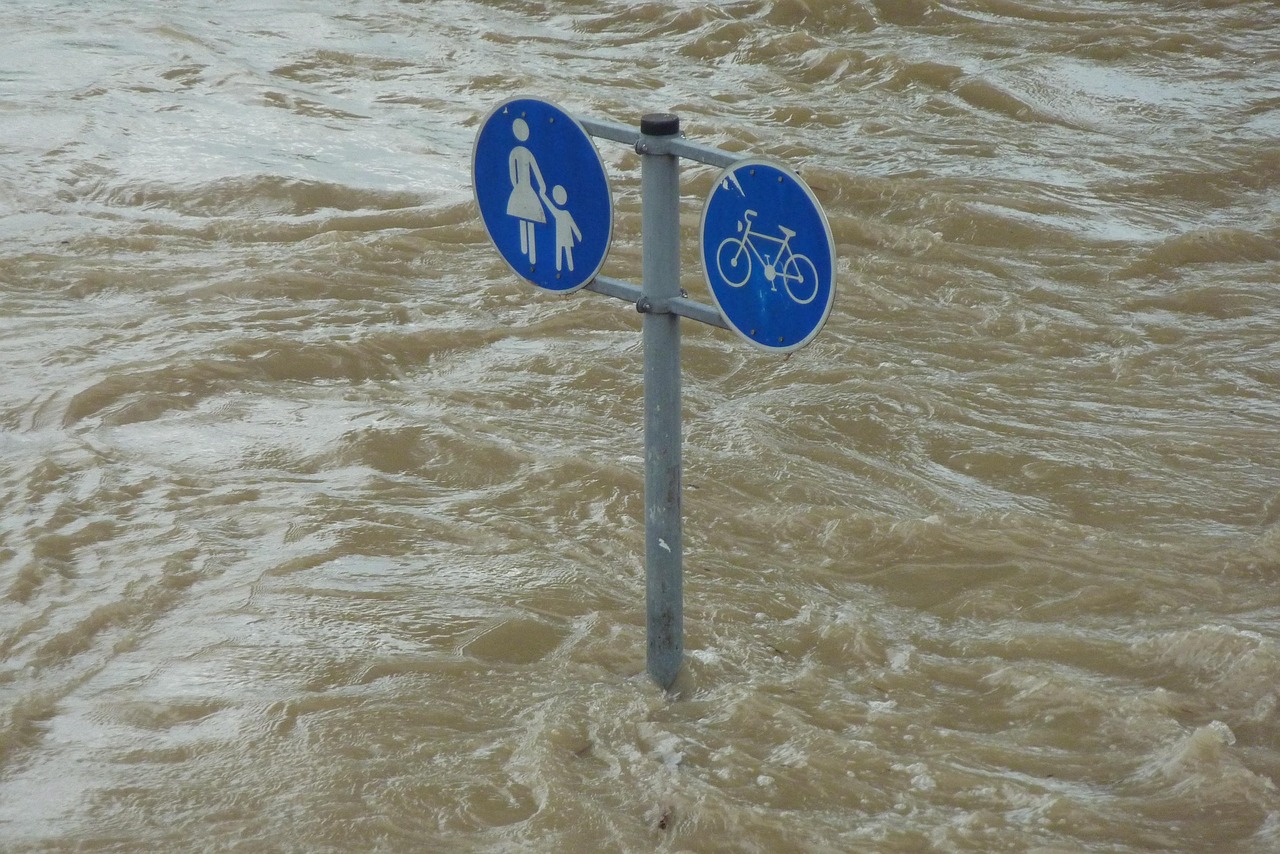
Monstrous Rivers: Investigating the Environmental History of Modern European Floods through Literary Sources
The research project Monstrous Rivers: Investigating the Environmental History of Modern European Floods through Literary Sources (led by dr. habil. Anna Barcz, funded by the National Science Center in Poland, no 2023/49/B/HS3/04329, period: 2024-2028) aims to explore the shifting role of hydroengineering in modern European history, specifically its correlation with river flood events between the 18th and 20th centuries.
To investigate what cultural contexts had and have impact on modern ways of managing rivers and environmental history of Europe, we focus on literary sources of three major streams, namely the Rhine, Danube and Thames. Our studies are accompanied by critical and historical analysis of maps to show what kind of warning signs the flooding rivers of modern Europe transmit to us.
The project’s team include: a historian of cartography, dr Katarzyna Słomska-Przech (IH PAN) and a historian of hydrology and hydroengineering, dr Karol Witkowski (IGiPZ PAN).
Informacje
Zobacz także
Modern tools for promoting didactic and research activities of the Institute of Literary Research of the Polish Academy of Sciences and the Institute of Polish Philology at the Faculty Of Humanities of Cardinal Stefan Wyszyński University in Warsaw.
The integrated project "Modern tools for teaching and research activities of the Institute of Literary Research of the Polish Academy of Sciences and the Institute of Polish Philology at the Faculty Of Humanities of Cardinal Stefan Wyszyński University in Warsaw" (No. PPI / NPZ / 2018/1/00065) assumed a series of activities based on the cooperation of Partners and synergy of their potentials. The idea of the project was to use modern digital marketing strategies and interdisciplinary tools to promote the scientific and didactic activities of IBL PAN, IFP WNH UKSW and - ultimately - other Polish and foreign Polish studies included in the framework of "Geopolonistics", created according to the idea of prof. Magdalena Popiel (president of the International Association of Polish Studies).
Architectural Literary Studies
Bertrand Westphal’s definition of geocriticism and its further developments were the starting point of the “Architectural Literary Studies” project. Research activities proposed in reference to it involved literary research analysis that could be used by other disciplines dealing with transformations of the urban space. It was important, firstly, to inquire about interdisciplinarity (and its limitations), understood as a method adapted by a researcher who uses concepts and theories from other disciplines, and, secondly, to try to develop a transdisciplinary research model based on collaboration within a multidisciplinary team. A 14-person research group analysed two Warsaw squares: Piłsudski Square and Parade Square (Plac Defilad).
Shaping Interdisciplinary Practices in Europe (SHAPE-ID)
The Institute of Literary Research of the Polish Academy of Sciences (Warsaw) is one of the Partners in the ‘Shaping Interdisciplinary Practices in Europe’ (SHAPE-ID) project which has been awarded funding of €1.5m through European Commission’s Horizon 2020 programme. SHAPE-ID is the answer to the challenges of the modern world which ought to be approached through interdisciplinary and transdisciplinary research. The project will produce practical recommendations for the European Commission. These will be concerned with transdisciplinarity and interdisciplinarity in research, especially in social sciences and humanities. SHAPE-ID is coordinated by Trinity College, Dublin. Other partners institutions are based in Holland, Scotland, Switzerland and Italy.
Słucham, rozumiem, działam (Listen, Understand, Act). Extension of Foreigners’ Language Competencies in Order to Prevent Social and Professional Alienation
The project is funded by the European Union from the European Social Fund within the framework of the Operational Program Knowledge Education Development 2014-2020. The programme is run by the University of Zielona Góra and the Educational Community “Civilitas” in Zielona Góra.